Nils Schwarz · 13 September 2026
Midvale's East District Development Prompts Fresh Look at Green Space Preservation Strategies
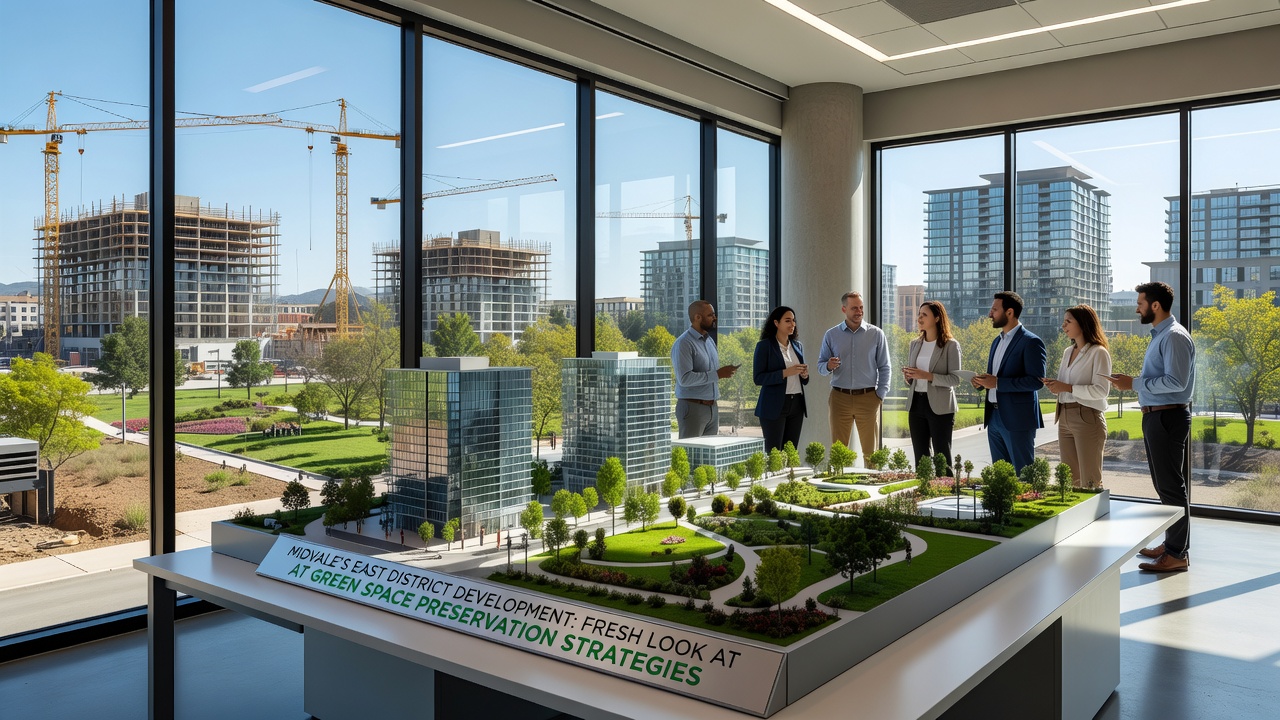
City planners in Midvale have initiated a review of green space preservation methods as construction advances across the East District, where residential and commercial projects continue to expand. The district has seen steady growth since early planning approvals, with new housing units and business facilities reshaping several blocks along the eastern corridor. Officials from the Midvale Planning Department released preliminary findings in August 2026 that highlight how increased building density affects local parks, trails, and open areas.
Development Activity and Timeline
Construction crews began work on the first phase of the East District project in late 2024, adding mixed-use buildings and improved roadways while preserving some existing natural features. By September 2026, multiple sites will reach completion stages, prompting the city council to schedule public hearings on how remaining undeveloped parcels can maintain ecological balance. Records from the planning department indicate that developers have set aside approximately 18 acres for potential recreation zones within the larger footprint, though final configurations remain under discussion.
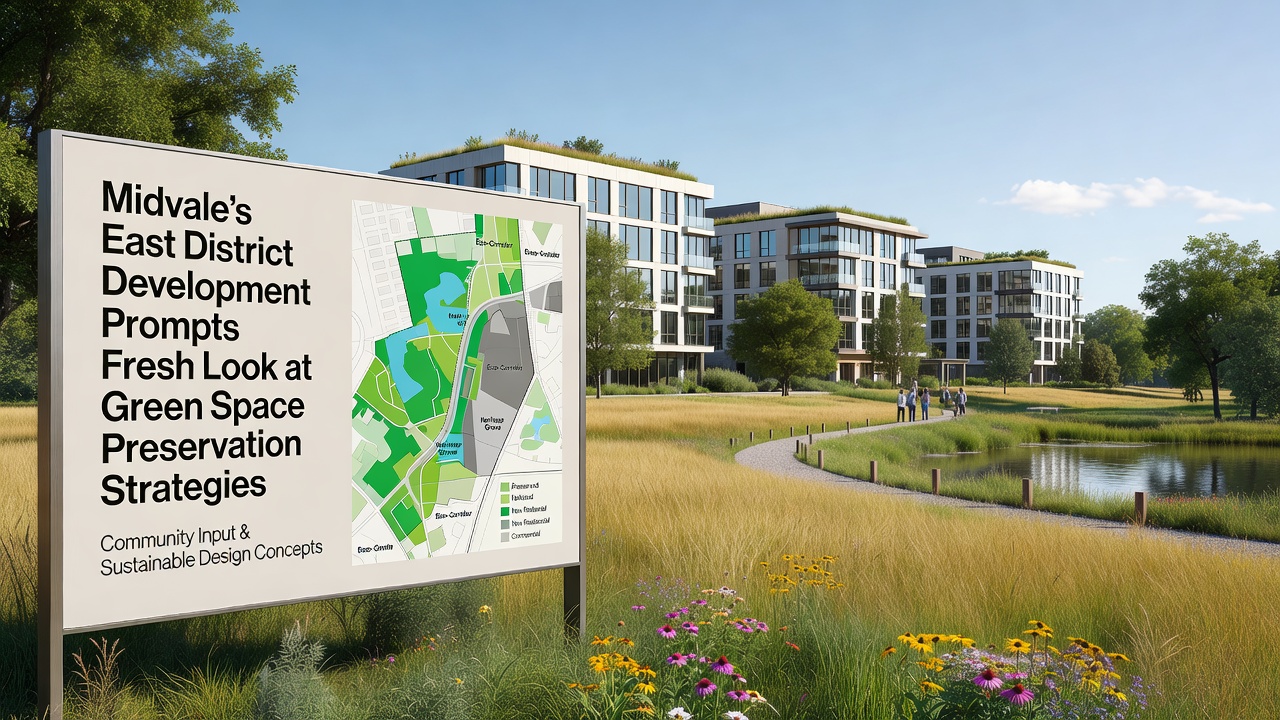
Data compiled by the Midvale Urban Development Office shows that population density in the East District has risen by 12 percent over the past three years. This growth places additional pressure on existing green infrastructure, including the 45-acre Riverside Greenway that runs along the district's northern boundary. Engineers have documented soil compaction and drainage changes near several construction zones, which has led to targeted studies on long-term vegetation health.
Current Preservation Approaches
Planners have examined strategies used in comparable communities to protect open spaces amid similar development pressures. One approach involves establishing buffer zones around sensitive habitats, while another focuses on integrating native plant species into new landscaping requirements. City documents outline how Midvale could adapt these methods through updated zoning ordinances that mandate minimum green coverage ratios for future projects.
Research from the U.S. Environmental Protection Agency provides benchmarks on urban tree canopy retention that local teams have referenced during internal reviews. Those guidelines emphasize measurable outcomes such as stormwater absorption rates and air quality improvements tied to preserved vegetation. Midvale's environmental staff has begun mapping priority areas where such interventions could yield the strongest results based on existing topography and water flow patterns.
Community Input and Data Collection
Public meetings held throughout 2025 gathered feedback from residents who use district parks for recreation and commuting. Attendance records show consistent participation, with many attendees raising questions about trail connectivity and wildlife corridors. Survey responses collected by the parks department reveal that 67 percent of respondents prioritize maintaining access to open areas over adding new amenities in adjacent developments.
Additional analysis draws on information from the Australian Government's Department of Climate Change, Energy, the Environment and Water, which tracks urban biodiversity metrics across multiple cities. Midvale planners have compared local species inventories against those datasets to identify potential gaps in habitat protection. This cross-regional comparison helps refine targets for pollinator support and native grass restoration within the East District boundaries.
Policy Adjustments Under Consideration
City staff continue evaluating revisions to the municipal green space ordinance that could require developers to contribute to a dedicated preservation fund. Proposed updates include incentives for projects that exceed baseline open-space percentages, along with requirements for ongoing maintenance plans submitted at the permitting stage. These measures build on existing frameworks already in place for other Midvale neighborhoods.
Traffic and land-use studies conducted in partnership with regional universities have supplied quantitative data on how green corridors influence pedestrian movement and local microclimates. Findings indicate measurable reductions in summer heat indices where tree cover remains intact, supporting arguments for strategic preservation during the remaining phases of East District build-out.
Conclusion
City records confirm that the East District development will continue through 2027, with green space strategies evolving in response to ongoing monitoring and public input. The planning department plans to issue a comprehensive update following the September 2026 hearings, incorporating feedback and revised mapping data. This process reflects standard municipal procedures for balancing growth with environmental considerations across Midvale's expanding districts.